
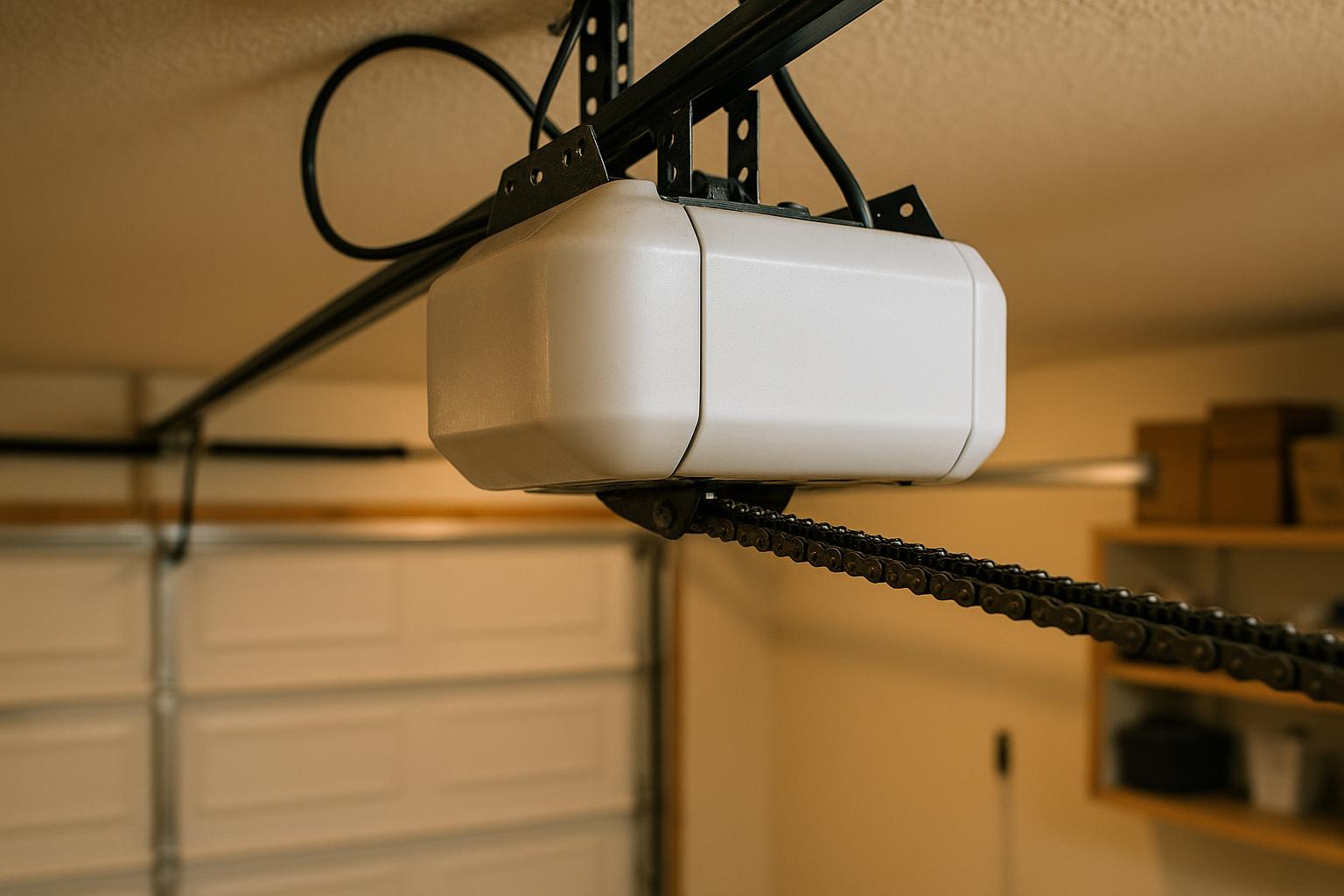
Your Garage Door Opener Won't Last Forever
Most homeowners don't think much about their garage door opener until the day it stops working entirely. You press the button, nothing happens, and suddenly you're late for work with your car trapped inside. The good news is that garage door openers rarely fail without warning. They almost always give you signs that something is going wrong — if you know what to look for.
Here in McMinnville, we see a lot of openers that have been running faithfully for 15 or 20 years before they finally start showing their age. Whether yours is a chain drive, belt drive, or screw drive model, understanding the warning signs can save you from an inconvenient — and sometimes costly — surprise.
How Long Should a Garage Door Opener Last?
The average garage door opener lasts between 10 and 15 years with normal use. Some well-maintained units can push past 20 years, but that's the exception rather than the rule. Several factors affect lifespan:
- Frequency of use: A family that opens and closes the garage door six or eight times a day will wear out an opener faster than someone who uses it twice daily.
- Maintenance habits: Openers that are regularly lubricated and inspected tend to last longer.
- Climate and environment: Tennessee's humidity and temperature swings can take a toll on electrical components and metal parts over time.
- Quality of the unit: Entry-level openers simply aren't built to last as long as commercial-grade or premium residential models.
If your opener is approaching the 10-year mark, it's worth paying closer attention to how it's performing.
7 Warning Signs Your Garage Door Opener Is Failing
1. The Door Moves Slower Than Usual
If your garage door has started opening or closing noticeably slower than it used to, the opener's motor may be wearing out. A healthy opener moves the door at a consistent speed. When the motor struggles, it often slows down before it fails completely. Don't confuse this with a door that's hard to move due to a spring or track issue — if the door moves freely by hand but the opener is sluggish, the problem is likely the unit itself.
2. Excessive Vibration or Shaking
Some vibration is normal, especially with chain drive openers. But if your opener has started shaking noticeably more than it used to, or if the mounting brackets are visibly moving, internal components may be wearing out. Excessive vibration can also loosen the opener from the ceiling over time, creating a safety concern.
3. Intermittent Operation
Does your opener work fine sometimes but refuse to respond other times? Intermittent operation is one of the most frustrating symptoms and can point to several issues — a failing circuit board, worn-out gears, or electrical problems. If changing the remote batteries doesn't fix it and the wall button is also unreliable, the opener itself is likely the culprit.
4. Unusual Grinding or Straining Noises
Every opener makes some noise, but you should be concerned about new noises. Grinding, squealing, or straining sounds often indicate that the internal gears are wearing down. In many openers, the main drive gear is made of nylon or plastic, and it will eventually strip out. Sometimes a gear replacement can extend the life of the unit, but if the motor itself is making the noise, replacement is usually the better option.
5. The Opener Runs But the Door Doesn't Move
If you hear the motor running but the door stays put, the internal gears have likely stripped. This is especially common in older Chamberlain, LiftMaster, and Craftsman models. You might also notice a burning smell when this happens. While gear kits are available for some models, this symptom often shows up in openers that are already near the end of their useful life.
6. The Remote Range Has Decreased
If you used to be able to open your garage door from the end of the driveway but now have to pull right up to the door before the remote works, the opener's receiver may be failing. Before blaming the opener, try replacing the remote battery and reprogramming it. If the range is still short, the issue is on the opener's end.
7. The Safety Features Aren't Working Properly
Modern garage door openers are required to have auto-reverse safety features — both a mechanical force sensor and photoelectric sensors near the floor. If your opener no longer reverses when it encounters resistance, or if the safety sensors seem unreliable despite being properly aligned and clean, the opener's control board may be failing. This is a safety issue that shouldn't be ignored, especially in homes with children or pets.
Should You Repair or Replace?
Not every failing opener needs to be replaced. Here's a general guideline we share with our customers in the McMinnville area:
Consider repairing if:
- The opener is less than 8 years old
- The problem is isolated to one component, like a gear or circuit board
- Replacement parts are readily available for your model
Consider replacing if:
- The opener is more than 12-15 years old
- Multiple components are showing signs of wear
- The unit lacks modern safety features like auto-reverse or rolling code technology
- Repair costs approach 50% or more of the price of a new unit
Newer openers also come with features that older models simply don't have — battery backup systems, smartphone connectivity, quieter belt drive operation, and improved security protocols. For many Warren County homeowners, upgrading to a modern opener is well worth the investment.
What to Do When You Notice These Signs
If your garage door opener is showing one or more of these symptoms, here's what we recommend:
- Don't ignore it. A failing opener can become a safety hazard or leave you locked out of your garage at the worst possible time.
- Test the door manually. Disconnect the opener and lift the door by hand. If it's heavy or hard to move, the problem might actually be a spring issue rather than the opener. A properly balanced door should lift easily and stay open about three or four feet off the ground.
- Check the simple things first. Replace remote batteries, make sure the sensors are clean and aligned, and look for any obvious obstructions on the track.
- Call a professional for a diagnosis. A trained technician can tell you quickly whether a repair makes sense or whether it's time for a new unit.
At McMinnville Door & Opener, we work on all major brands and can help you figure out the most practical path forward — whether that's a straightforward repair or a full opener replacement. We serve homeowners throughout McMinnville, Morrison, Smithville, Spencer, Woodbury, and Dunlap, and we're always happy to give you an honest assessment.
Don't Wait Until You're Stuck
A garage door opener that's on its way out will only get worse. Catching the warning signs early gives you time to plan, compare options, and avoid the stress of an emergency repair. If something about your opener doesn't seem right, trust your instincts and get it checked out. A little attention now can save you a lot of hassle later.