
A Frustrating Problem That's More Common Than You Think
You press the button on your garage door remote, the door starts moving down, and then — right before it reaches the floor — it reverses and goes back up. You try again. Same thing. Maybe it works on the third try, maybe it doesn't. Either way, you're standing in your driveway in McMinnville wondering what just happened.
This is one of the most common garage door complaints we hear at McMinnville Door & Opener. The good news is that it's usually caused by something identifiable, and in many cases, it's a straightforward fix. The bad news is that ignoring it can lead to bigger problems down the road — or leave your garage unsecured overnight.
Let's walk through the most likely reasons your garage door reverses before closing all the way and what you can do about each one.
The Safety Sensors Are Blocked or Misaligned
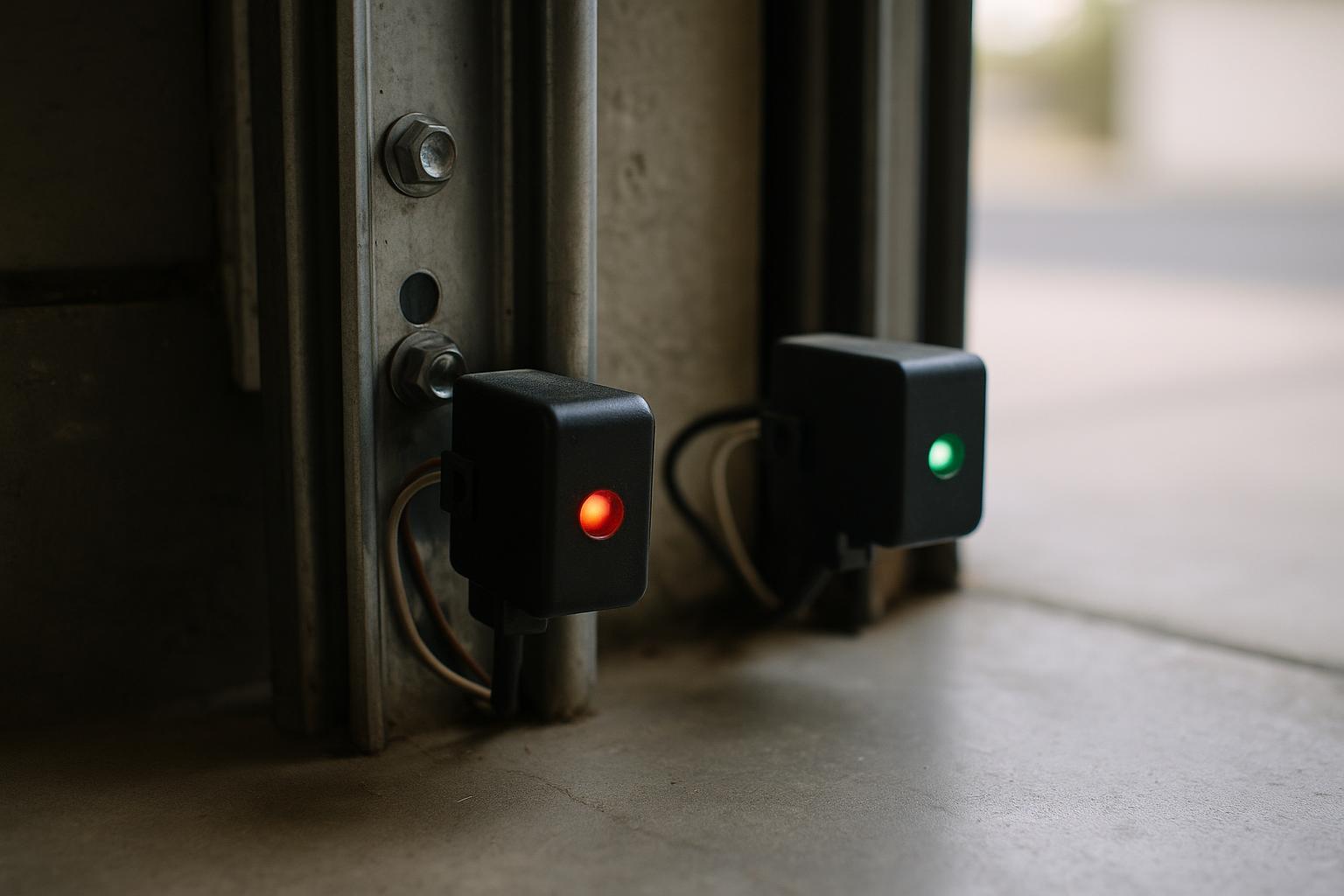
This is the number one cause of a garage door that reverses before reaching the ground. Every modern garage door opener has two small photo-eye sensors mounted near the bottom of the door tracks, one on each side. These sensors send an invisible beam across the opening. If anything breaks that beam while the door is closing, the opener assumes something is in the way and reverses the door to prevent injury or damage.
Here's what to check:
- Look for obstructions. A broom, a trash can, a bike tire, or even a pile of leaves can block the sensor beam. Move anything that's near the sensors and try again.
- Check for dirt on the sensor lenses. Over time, dust, cobwebs, and grime can build up on the small lenses. Wipe them gently with a soft cloth.
- See if the sensors are aligned. Each sensor typically has a small LED light. If one is blinking instead of staying solid, the sensors are likely out of alignment. A small bump from a lawnmower or a kid's toy can knock them off. Gently adjust the sensor bracket until the light stays steady.
In our experience working with homeowners across McMinnville and Warren County, misaligned sensors account for the majority of reversal issues. It's a simple fix, but it's easy to overlook.
The Close-Limit Switch Needs Adjusting
Your garage door opener has a setting called the close-limit switch, which tells the motor how far the door should travel before it considers itself fully closed. If this setting is off — even by a small amount — the opener may think the door has hit an obstruction when it actually just reached the floor.
When the opener senses more resistance than expected, it triggers the auto-reverse safety feature. The door goes back up, and you're left confused.
Adjusting the close-limit switch usually involves turning a small screw or dial on the opener unit itself. Your owner's manual will show you exactly where it is and which direction to turn it. Make small adjustments and test the door after each one. If you're not comfortable doing this yourself, that's a perfectly good reason to call a professional.
The Tracks Are Dirty or Damaged
Garage door tracks guide the rollers as the door moves up and down. If the tracks are bent, dented, or caked with debris, the door can encounter resistance during its travel. When the opener detects that extra resistance, it may interpret it as an obstruction and reverse.
Take a close look at both tracks from top to bottom. Look for:
- Visible dents or bends in the metal
- Buildup of dirt, grease, or small debris
- Gaps between the track and the wall where mounting brackets may have loosened
You can clean the tracks with a damp cloth and a mild household cleaner. However, if you see any bending or warping, don't try to fix it yourself with a hammer. Improperly repaired tracks can cause the door to come off its track entirely, which is a serious safety hazard. That's a job for a trained technician.
Worn or Broken Springs Are Creating Imbalance
Your garage door springs do the heavy lifting — literally. They counterbalance the weight of the door so the opener motor doesn't have to work as hard. When springs wear out or break, the door becomes significantly heavier for the opener to move. This extra strain can cause the opener to reverse because it senses too much resistance.
Signs of a spring problem include:
- The door feels very heavy when you try to lift it manually
- The door opens unevenly or looks crooked
- You heard a loud bang from the garage (a common sign of a spring breaking)
- There's a visible gap in one of the torsion springs above the door
Spring replacement is not a DIY job. Garage door springs are under extreme tension and can cause serious injury if handled improperly. If you suspect a spring issue, please call a professional. At McMinnville Door & Opener, spring replacement is one of our most common service calls, and we can usually handle it the same day.
The Opener Force Settings Are Too Low
In addition to the limit switch, most garage door openers have a force setting that controls how much power the motor uses to move the door. If the downward force is set too low, the opener may not have enough power to push the door all the way to the ground, especially if the door is older, heavier, or if weather conditions have changed.
Temperature swings here in Middle Tennessee — from hot, humid summers to cold winter mornings — can cause the metal components of your garage door system to expand and contract slightly. This can change how much force is needed to close the door. A small adjustment to the force setting on your opener can often solve the problem.
Again, your owner's manual is your friend here. Look for the force adjustment dial or screw, and make very small changes at a time.
When to Call a Professional
Some of the fixes above are things a handy homeowner can tackle in a few minutes. Others require experience and specialized tools. Here's a general rule of thumb:
- Try the simple stuff first. Clean the sensors, check for obstructions, and wipe down the tracks.
- Consult your owner's manual for limit and force adjustments if the simple fixes don't work.
- Call a pro if you suspect spring damage, track warping, or if the problem persists after your troubleshooting.
A garage door that won't close properly isn't just an inconvenience — it's a security risk for your home and everything inside your garage. If you're in McMinnville, Morrison, Smithville, Spencer, Woodbury, or Dunlap, McMinnville Door & Opener is here to help. We'll diagnose the issue, explain what's going on in plain language, and get your door working right.
Don't Let a Small Problem Become a Big One
A reversing garage door is your system telling you something isn't right. Most of the time, it's a minor issue with a quick fix. But left unaddressed, small problems can put extra strain on your opener motor, wear out other components faster, and leave your garage vulnerable. Whether you handle it yourself or give us a call, the important thing is not to ignore it.